 EN
 DE

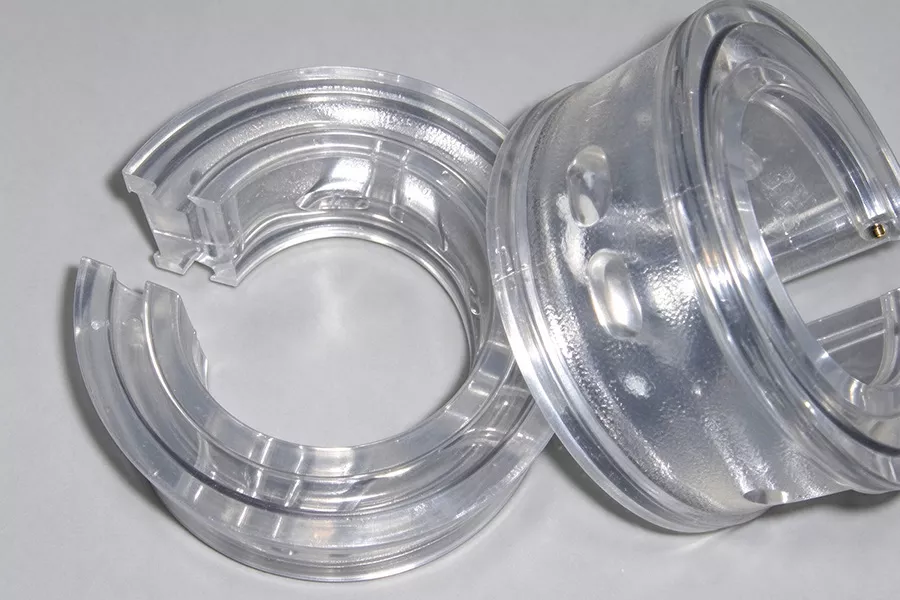
Transparent injection molded parts require more than a clear plastic material to achieve a high-quality appearance. The surface finish of the mold cavity, the precision of mold manufacturing, and the injection molding process all influence the final result.
For applications involving transparent PC, PMMA, and other clear plastics, even minor scratches, machining marks, or surface imperfections can become visible on the molded part. Achieving a high-gloss finish therefore requires careful control throughout the mold manufacturing process.
In this article, we explain why mold polishing matters for transparent injection-molded parts, what factors affect surface quality, and how manufacturers can achieve a consistent finish.
1. Why is Mold Polishing Important for Transparent Plastic Parts?
The mold cavity directly transfers its surface characteristics to the molded plastic part. If the cavity contains visible machining marks, scratches, or polishing defects, these imperfections may be reproduced on the finished component.
For transparent parts, the effect can be particularly noticeable because light passes through the material, making certain surface defects easier to see.
High-gloss mold polishing is commonly required for applications such as:
- Transparent PC covers and protective housings
- PMMA display components and decorative parts
- Clear plastic lenses and light-transmitting components
- Transparent industrial covers and precision components
- Custom clear plastic parts with demanding cosmetic requirements
The required surface finish depends on the part’s function, viewing area, material, and customer specifications. Not every transparent component requires the same polishing level.
2. Choosing the Right Mold Steel for High-Gloss Polishing
The mold cavity directly transfers its surface characteristics to the molded plastic part. If the cavity contains visible machining marks, scratches, or polishing defects, these imperfections may be reproduced on the finished component.
For transparent parts, the effect can be particularly noticeable because light passes through the material, making certain surface defects easier to see.
High-gloss mold polishing is commonly required for applications such as:
- Transparent PC covers and protective housings
- PMMA display components and decorative parts
- Clear plastic lenses and light-transmitting components
- Transparent industrial covers and precision components
- Custom clear plastic parts with demanding cosmetic requirements
The required surface finish depends on the part’s function, viewing area, material, and customer specifications. Not every transparent component requires the same polishing level.
3. Precision Machining Before Polishing
High-gloss polishing starts before the polishing process itself.
Precision milling, EDM, and other mold manufacturing operations establish the geometry and initial surface condition of the cavity. If machining marks are too deep or the surface is uneven, additional polishing may be required to remove them.
Excessive polishing can create other problems, including changes to cavity dimensions, rounded edges, and deviations from the intended surface geometry.
To reduce these risks, the mold manufacturing process should include:
- Appropriate cutting parameters and tool selection
- Careful control of cavity geometry and surface condition
- Consistent EDM finishing where electrical discharge machining is used
- Removal of machining or EDM damage before final polishing
- Inspection of critical dimensions before and after finishing where necessary
The goal is to establish a suitable surface condition through machining so that polishing can refine the surface without compromising dimensional accuracy.
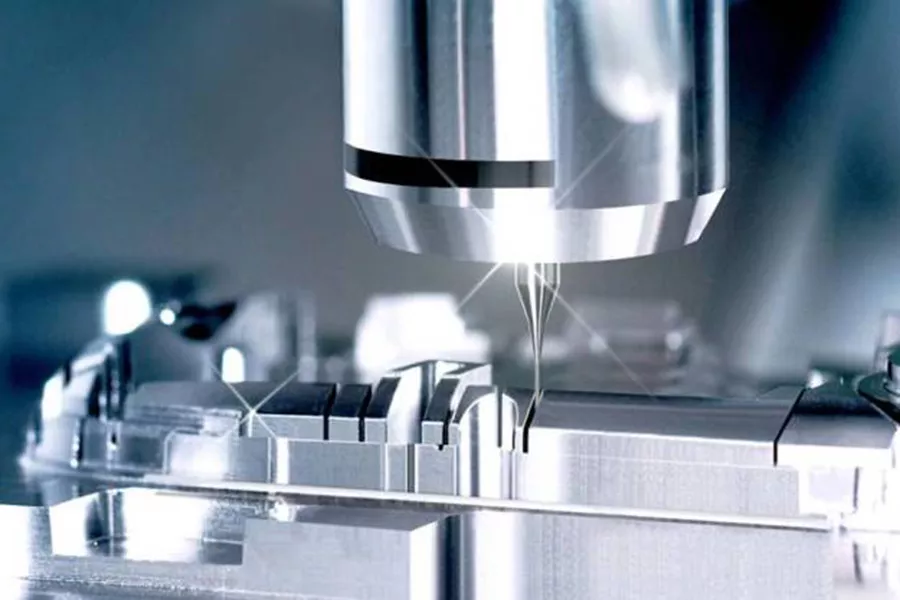
4. Understanding the Mold Polishing Process
Mold polishing is a controlled finishing process that progressively reduces surface irregularities.
Depending on the initial surface condition and the required finish, the process may involve several stages:
Step 1: Surface preparation
The cavity surface is inspected to identify machining marks, EDM texture, scratches, and other imperfections. The initial surface condition determines the appropriate starting point.
Step 2: Progressive abrasive finishing
Suitable abrasives are used in stages to remove surface irregularities. Each stage should remove the marks left by the previous stage before moving to a finer abrasive.
Step 3: Fine polishing
Finer abrasives are used to refine the surface and reduce visible scratches. Careful control is required around corners, edges, ribs, and other detailed features.
Step 4: Final surface inspection
The cavity is inspected under appropriate lighting and magnification, where necessary, to check for scratches, uneven gloss, and other visible defects.
The exact sequence depends on the mold steel, cavity geometry, initial machining condition, and required surface finish. A standardized polishing sequence cannot replace the judgment and experience required for complex mold surfaces.
5. Common Mold Polishing Problems and Their Impact
Several issues can prevent a mold from achieving a consistent high-gloss finish.
Scratches and visible polishing marks
Scratches may remain if earlier abrasive marks have not been completely removed. Using finer abrasives without removing the deeper marks first will not necessarily solve the problem.
Uneven gloss
Differences in polishing direction, pressure, or surface preparation can create variations in the appearance of the cavity and molded part.
Rounded edges and altered geometry
Excessive polishing near sharp edges, parting lines, or detailed features can change the intended geometry. This is particularly important for precision components with tight dimensional requirements.
Pitting and surface imperfections
Material-related defects or localized surface damage may become apparent during polishing. These issues may require further evaluation rather than simply continuing with finer abrasives.
Effective polishing depends on identifying the cause of each defect and selecting the appropriate corrective action.
6. Mold Polishing Alone Cannot Guarantee a Clear Plastic Part
A highly polished mold surface is important, but it does not guarantee that the final molded component will be optically clear or free of defects.
The appearance of a transparent part is also affected by resin quality, material drying, melt temperature, mold temperature, injection speed, packing conditions, venting, gate design, and cooling.
For example, silver streaks may be related to moisture or material degradation, while weld lines and flow marks may be influenced by filling behavior and gate location.
Therefore, mold surface finishing should be developed together with the overall injection molding process. Mold trials help verify whether the required appearance and dimensional specifications can be achieved under actual processing conditions.
7. How to Achieve Consistent High-Gloss Mold Quality
For transparent injection molded parts, a reliable approach combines appropriate material selection, precision mold manufacturing, controlled polishing, and systematic inspection.
Key considerations include:
- Define the required surface finish and cosmetic acceptance criteria before mold manufacturing.
- Select mold steel suitable for the required finish and production environment.
- Control machining quality to reduce unnecessary polishing work.
- Protect finished cavity surfaces against scratches and contamination.
- Verify critical dimensions after finishing where polishing may affect geometry.
- Conduct mold trials to evaluate the actual molded parts under the intended processing conditions.
For demanding applications, clear communication between the customer, mold designer, mold maker, and molding team helps establish realistic requirements and avoid unnecessary rework.
High-gloss mold polishing is an important part of manufacturing transparent injection molded parts. Achieving a consistent finish requires more than fine abrasives: it depends on suitable mold steel, precision machining, a controlled polishing sequence, dimensional control, and careful inspection.
By addressing surface quality early in mold development, manufacturers can reduce finishing risks and improve the likelihood of meeting the required cosmetic and dimensional specifications.

Phone
+86-0769-86066062

info@kehuimold.com


